Collection
Strappado | Armbinders
 Tamandua
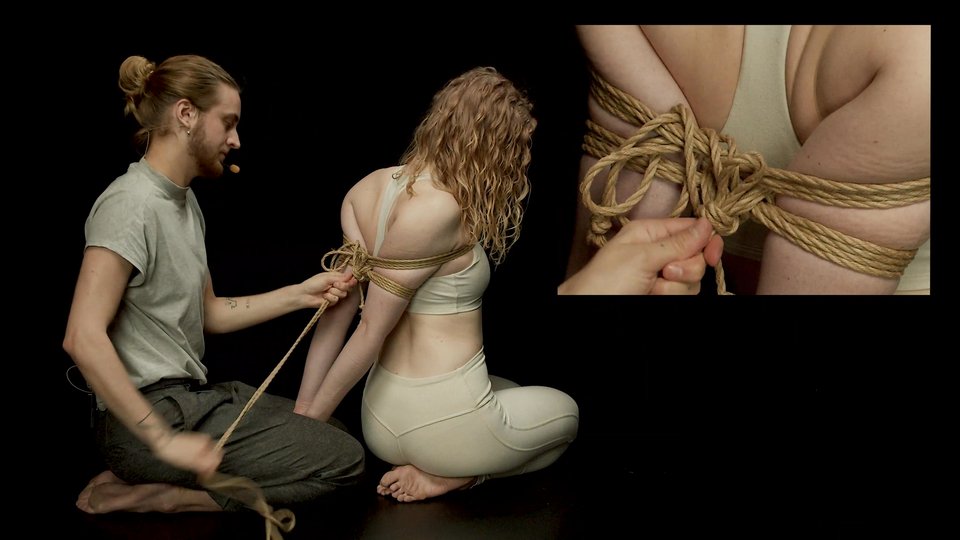
In this class, Tamandua teaches two variations of strappado (behind-the-back armbinders).
The first variation is easily adaptable for bottoms who may not easily be able to get their elbows close together, while still creating an arm binder that is compact and restrictive. Because this variation of the tie does not support the chest, it’s best utilized for floor-play or partial suspensions only. The second variation with additional wrapping around the chest is suitable for suspensions.
For the suspension line, we recommend using an epsilon on the top wrap for more chest load and eventually add a secondary rope from the wrists to lift the arms. For partial suspensions, you may also attach a rope directly from the wrists with an epsilon for a more extreme variation, as demonstrated in the free Strappado Session demo.
Strappado ties are fairly demanding on the body and involve a higher risk of nerve compression and blood circulation issues – we recommend doing regular hand checks and practicing these ties with extra care.
*Captions available for this series: English
Show moreShow less

Comments on collection (8)

SilverJuly 7, 2020
Oh...no suspension lines on the suspendable version? :(Show replies (3)

Anton (.July 8, 2020
You should use an Epsilon on the top wrap for more chest load and eventually add a secondary rope from the wrists to lift the arms. For partial suspensions, or if your partner is ok with it in full suspensions, you may also attach directly from the wrists with an Epsilon for a more extreme variation.Anton (.August 13, 2020
Thank you for the beautiful feedback Marcus. We are happy to read that this video has inspired you!SilverJuly 9, 2020
Thank you so much, one more time.
Climbing K.July 3, 2023
Question around nerve safety in Strappado's. I have been to a TK class recently and was taught tight wraps on lower half of the arm and the dip at the end of the delts is a no go. How come strappados can place tight wraps around more risky nerve areas and remain safe (ish as rope gets), or acceptable in risk?
Show replies (1)
Anton (.September 1, 2023
Hi there, thank you for your question. We believe that this is something to be highly aware of in your risk profile if you’re going to do strappados. There is absolutely a risk to this and the reason it works for some people and not others, depends on the person’s body and nerves. Cait’s nerve class would be a good one to check out, and we'd recommend experimenting with strappados on the group and checking in about nerves as a good way to start.
WojciechSeptember 8, 2020
How long rope do you use here?Show replies (1)
Anton (.September 10, 2020
The average length Tam uses is 7.5m, but some of his ropes are slightly longer or shorter for different applications.

