Collection
Tengu Harness
 Tamandua
GO TO TAM’S TENGU HARNESS GUIDE
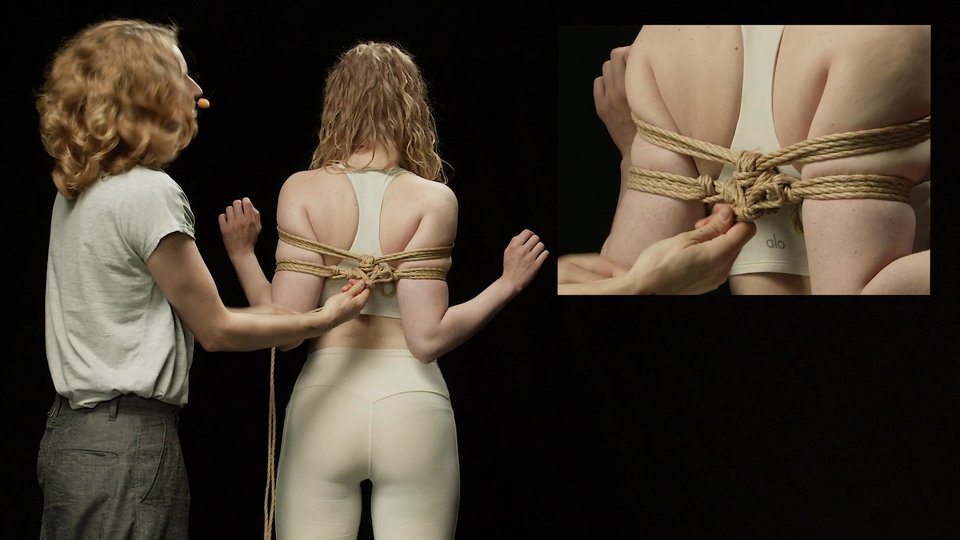
In this class, Tamandua teaches his variation of the Tengu with his model Mie Neko.
The Tengu (or “demon” tie) is a versatile modern Shibari harness, the position of which is inspired by the wings of the Tengu, mythological creatures featuring large wings.
Though the chest-opening position created by the Tengu accentuates vulnerability and exposure of the front body, it is, in fact, a very stable and sustainable tie that doesn’t require too much flexibility from the model and is suitable for all body types.
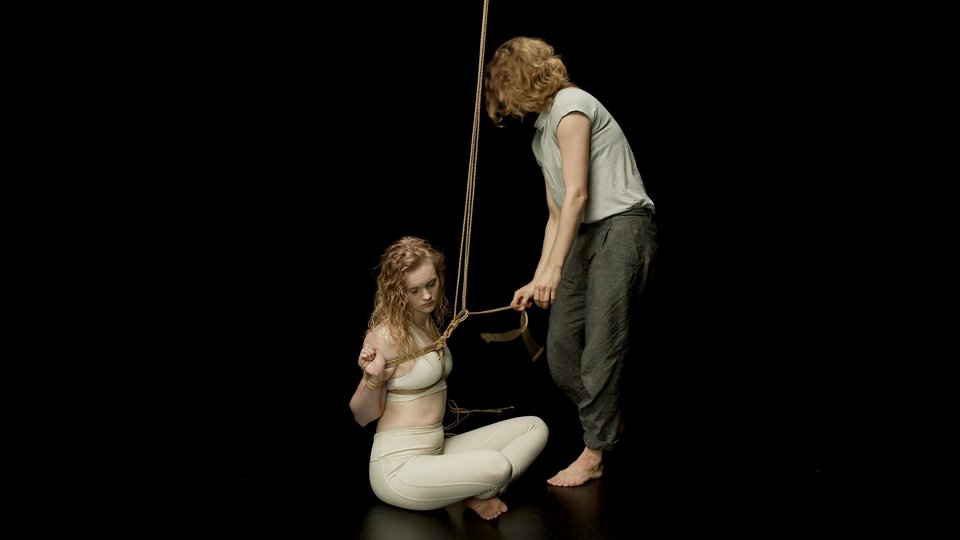
This harness is also perfectly suspendable, meaning that it can be utilized as an alternative to a TK, if they are not suited to your partner or if you'd like to try a different shape. This harness can be loaded from the front or back as demonstrated in the suspension video.
The harness alone is a suitable tie for intermediate level riggers, though using it for suspension is only advised for advanced practitioners. Tamandua also demonstrates another version of the Tengu for floor-play using bamboo in his series 'Semenawa Bamboo Ties'.
* Captions available for this series: English
Show moreShow less
Comments on collection (6)

SilverJune 17, 2020
This was one of the tutorials I most expected from Shibari Study. I've seen other tutorials, but they just were too amateurish, or with bad quality of video or with dubious explanations. The calm and smooth way Tamandua presents it reassures the quality of the instruction always present in all Study's videos. It was very satisfying , comprehensible and effective. A question: would it be safe to force the hands back with a rope though the fingers, instead of catching them all at once? And just an observation: When Tamandua goes for the Hojo cuff on the left arm (03:51 approximatedely, on the first video), the camera that should be focused on that stays frozen on the model's right shoulder, so... It didn't add to the visualization of the tie as this resource always do (in fact, already did at the beggining of this very video).Show replies (2)

Anton (.June 17, 2020
Thank you so much for your kind comment and feedback! You can try different variations, but for suspensions we recommend grabbing the palm of the whole hand rather than the fingers. The hands are strong enough to "resist" a bit against the cuffs and relief the pressure on the wrists when needed. About the insert mistake, there was an error during the export of the video. It has been fixed and re-uploaded now. We hope you enjoy this new tutorial!SilverJuly 2, 2020
That's why I asked, I imagined the fingers might be unnecessary risky. And thank you for the fixed video!!

TSPDecember 5, 2021
I really love this tie, but you should be aware that stopping the blood circulation due to the raised hands is very dangerous and should not be taken lightly! I know that for myself, because a very talented rigger from my region did that on me and it was incredibly exhausting and we don't even got to that point of tying the hands, so we had to stop :-( After that, I tried that tie twice on both of my rope partners on the floor, but I made it much looser and purely on the floor - so it was okay.Show replies (1)
Anton (.May 23, 2022
Thank you for your comment. This is true and absolutely something people should be mindful of. 🙏 Something that also helps is when releasing the arms, the rigger pushes back on the arms as the bottom is releasing to add a bit of tension on the release. Hope this helps!

ennaOctober 14, 2020
Quick Review: I've got so much love for this Tengu. It's a challenge for the bottom, holding the chest open and the shoulders tightly back in a way that really reminds you how much time we spend hunched forward over keyboards. That challenge is there from early on, so I'd recommend stretching and warming up well if you plan to be in this for any length, especially for suspension. I have a fairly curved spine and a natural tendency to drop into it, and I found that it took some core strength to tuck my pelvis while my shoulders were pulled back. To the tie itself: this has challenge and complexity but is not fiddly. It flows smoothly and reasonably swiftly. Instructions are clear and concise. Tamandua does leave some parts up to the rigger and, as they are around the stem area, that might make this a bit harder for a beginner to follow. We'd say this is more for intermediate to advanced riggers. We have found that transitioning from the Tengu to a TK is quite smooth and quick because of the way the harness is built, so if that suits your plans for a session then do try it out.