Collection
Frictions Lexicon
 Gorgone
This shibari course by Gorgone teaches the fundamental frictions used in rope bondage with her model Miah.
These shibari frictions have various functionalities, from changing direction, to creating stems and solid wraps, to isolating various tensions throughout a tie. They are building blocks used to reinforce, connect or isolate the simple wrappings you've learned in the previous classes and combine them into more sophisticated patterns.
Half Hitch
Munter Hitch
X Friction
Half-Moon
L Friction
Hojo Cuffs
Mix it up!
Shibari is like rope Lego! Once you have learned and mastered the basic shibari knots, the shibari wrappings and these fundamental frictions, you can combine them to recreate existing patterns or use your imagination to create endless variations and new combinations. You will start noticing that anything you tie, from the most simple to the most intricate pattern, is always a combination of the same simple elements.
Find inspiring ways to use your new skills in the following courses;
Simple Self-Ties, Simple Harnesses, Minimalistic Ties, Less is More.
*Captions available for this series: English
Show moreShow less
8 videos
 01:26
01:26Frictions | Intro
Introduction of the Frictions Lexicon.
 07:18
07:18Half-Hitch
In-depth explanation of the half-hitch.
 13:23
13:23Munter Hitch
In-depth explanation of the Nodome, aka Munter Hitch.
 10:29
10:29X-Friction
In-depth explanation of the X Friction.
 07:10
07:10Half-Moon
In-depth explanation of the Half-Moon Friction.
 08:07
08:07L-Friction
In-depth explanations of the L Friction.
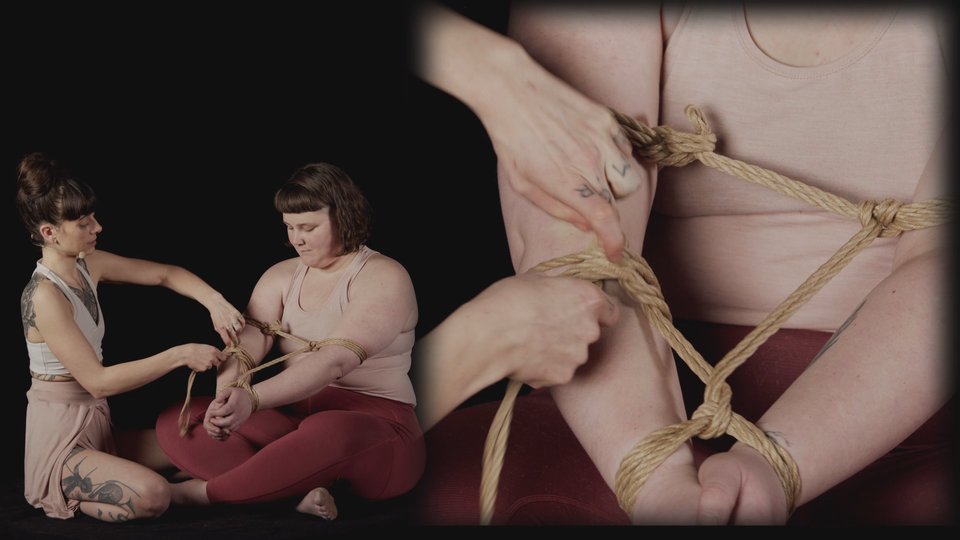 08:16
08:16Hojo Cuffs
In-depth explanation of the Hojo-Cuff.
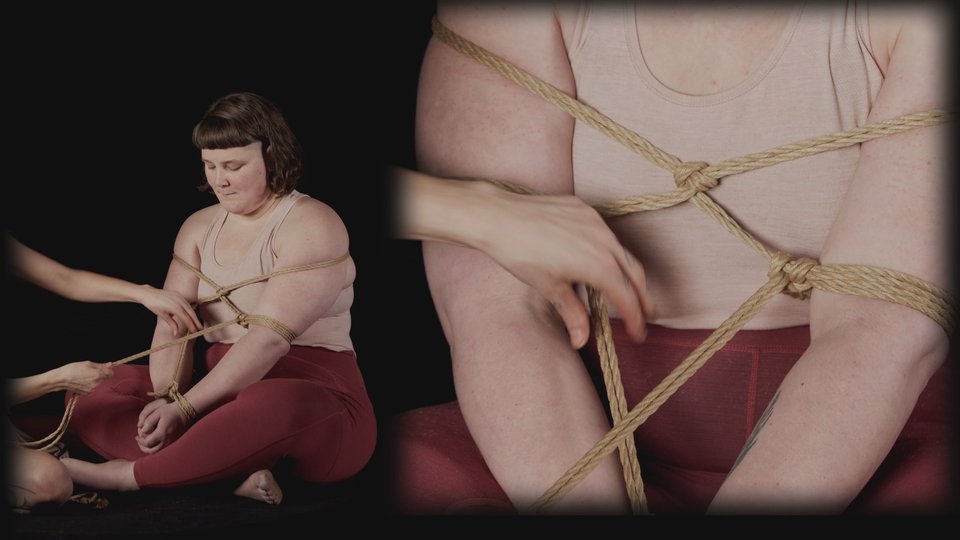 07:34
07:34Mix it up!
In-depth tutorial on how to combine different frictions together.
Comments on collection (12)
BlueEyedSirNovember 15, 2022
I love the 'why' parts a lot... Helps me remembering betterShow replies (2)
J T.March 28, 2023
+1!

Anton (.November 23, 2022
Thank you so much!😍
HenkJanuary 28, 2022
Hey Gorgone, In the half hitch lesson, you taught us the single column tie alternative using a larks head combined with a half hitch. To me this seams a superior single column tie compared to all the single column ties taught before (except for the sommerville bowline), why isn't this variant with the larks head and the half hitch covered in the single column tie lesson? Even on small body parts it works fine when I tried it? Thank you for your time!Show replies (2)
Anton (.October 30, 2023
Oftentimes, especially when you’re first learning, it’s helpful to be able to untie to initial single column tie to get someone out of rope quickly. This SCT method can’t be untied, meaning that it’s not always an ideal way to start a harness. All SCT lock offs come with their own set of pros and cons! There really isn’t one best option, but rather the best option for each scenario (and your own skill and confidence in your rope handling is part of that equation). So we encourage you to explore all of them while developing your own sense of when each method is more/less appropriate.tfaeNovember 19, 2025
With reverse tension, you have to pull the entire length of rope through while tying and untying, which is rather slow. Forward tension single columns (including the Somerville bowline) are much quicker.
FrankNovember 19, 2023
Gorgone mentions a 2 hour course but the videos on the Shibari Study app don’t add up to nearly that length. Is there an extended version somewhere?
Show replies (1)

ShibariStudyJanuary 24, 2024
Hi there! The mention of these two hours by Gorgone refers to their recommendation for practicing and mastering all the techniques covered in the videos. It's not the total length of the videos themselves. Taking the time to practice over a span of two hours can really help you get comfortable with the frictions taught in the course :)

ropespacedNovember 3, 2021
Would you say that there is a difference between hitches (such as the half hitch or munter hitch) and frictions (such as the X friction, half moon friction, or L friction)? Or are they basically the same thing but with different, interchangeable names?Show replies (1)
Anton (.May 23, 2022
Hi Cait! Thanks for your question :) They aren't necessarily interchangeable as some frictions/hitches have specific purposes. Additionally, you are able to close off a Munter hitch in the way you tie it but need to add additional hitches to a half hitch in order to lock it. The frictions will also work differently as in locking off one side of a wrap vs. locking it all off. Hope this helps❤️

AHJuly 5, 2021
Excellent. Very clear and concise instructions.JeffJune 22, 2020
Great course! I always throw a half hitch on the original rope after the hojo cuff (where you show a twist at 1:35). It really helps to isolate the cuff. Just tension the cuff with your finger and slam the half hitch down against it so it doesn't collapse. It could even be turned into a quick release / double bight.


