Collection
Agura Harness
 Fred Hatt
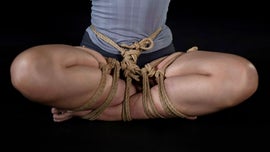
In this class, Fred Hatt teaches a suspendable Agura Harness with his model Briki.
Modern Shibari refers to any crossed-leg sitting position as Agura Shibari. For floor play, a simple version of this tie is sufficient but when used for suspensions a more stable structure is necessary. In this video, Fred shows how to tie the Agura with a lot of reinforcements and a solid stem allowing for various anchoring options.
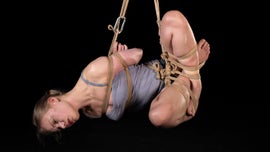
In the suspension video, he demonstrates some of the many possible ways to suspend from this harness. We recommend going back to the ground between the different positions to give your model a rest as this is a fairly intense and challenging tie to be suspended from.
Please feel free to use a different upper-body tie as an alternative to the TK in order to reduce the risk of nerve injury. Recommended harnesses for safer Agura suspensions; Butterfly Harness, Xana Harness, Misungui Harness, Fisherman Harness.
For expert users who wish to spice things up and feel confident using more demanding upper-body structures, you can replace the TK with harnesses like the Neck Hug, Bunny Tie, Tengu or Teppo, for example. If you choose to increase the difficulty by using more challenging chest harnesses, we highly recommend to first experiment with partial suspensions before attempting to fully suspend.
* Captions available for this series: English
Show moreShow less
Comments on collection (9)
marcela B.February 6, 2021
Hi ! I wanted to know if the ropes used in this tutorial are the same from shibaristoreuk ? Very good tutorial !Show replies (2)
marcela B.February 6, 2021
Thank You ! Definitely getting some of them. Greetings from Chile !
Anton (.February 6, 2021
Yes, the ropes are the same!
FinJune 9, 2022
There are several places in this demo where half hitches are used "to lock it off". But these are not really necessary are they? It appears that they have been added as an additional security/safety measure perhaps for those with limited experience. But if your munter hitches/nodome are solid then the half hitches are really extra work. And half hitches can be difficult to untie after a suspensions load. Thoughts?Show replies (1)
Anton (.October 30, 2023
It’s true that there are several moments in this video where a half hitch is demonstrated that might not be strictly necessary. In some of those cases, if you were to omit the half hitch, you’d need to make sure to lock the tension of a cuff later in the pattern, probably when reinforcing the stem. Whether or not this would provide an advantage when untying may be specific to your rope, though your half hitches shouldn’t get so tight that they’re truly challenging to untie. In general, many frictions can be substituted for others, and it’s pretty common for riggers to start making their own choices about how to isolate tensions within a harness as they get more confident. Whatever you choose, seek frictions that are stable, efficient, comfortable for your model, and do the job of isolating tension within a wrap!
TRTPFebruary 25, 2021
I would have loved to hear her discuss what was difficult for her about this particular suspension / where she was feeling most of the pressure. I’d just love to hear more bottom feedback in the videos in general.Show replies (1)
Anton (.March 5, 2021
We will consider this feedback in our future productions thank you!
KaykJanuary 25, 2021
What makes this an advanced tie? Is it also advanced only on the floor and are there any adjustments to make it safer?Show replies (1)
Anton (.February 1, 2021
Good question! We have labelled this tie as advanced because this version is designed specifically for suspensions and the pattern is quite intricate. It is perfectly safe to use on the floor if you are more beginner-intermediate level. There is also a much simpler Agura tie for floor play only in the course 'Less is More' and 'Simple Self Ties' in the Beginner Classes category!


